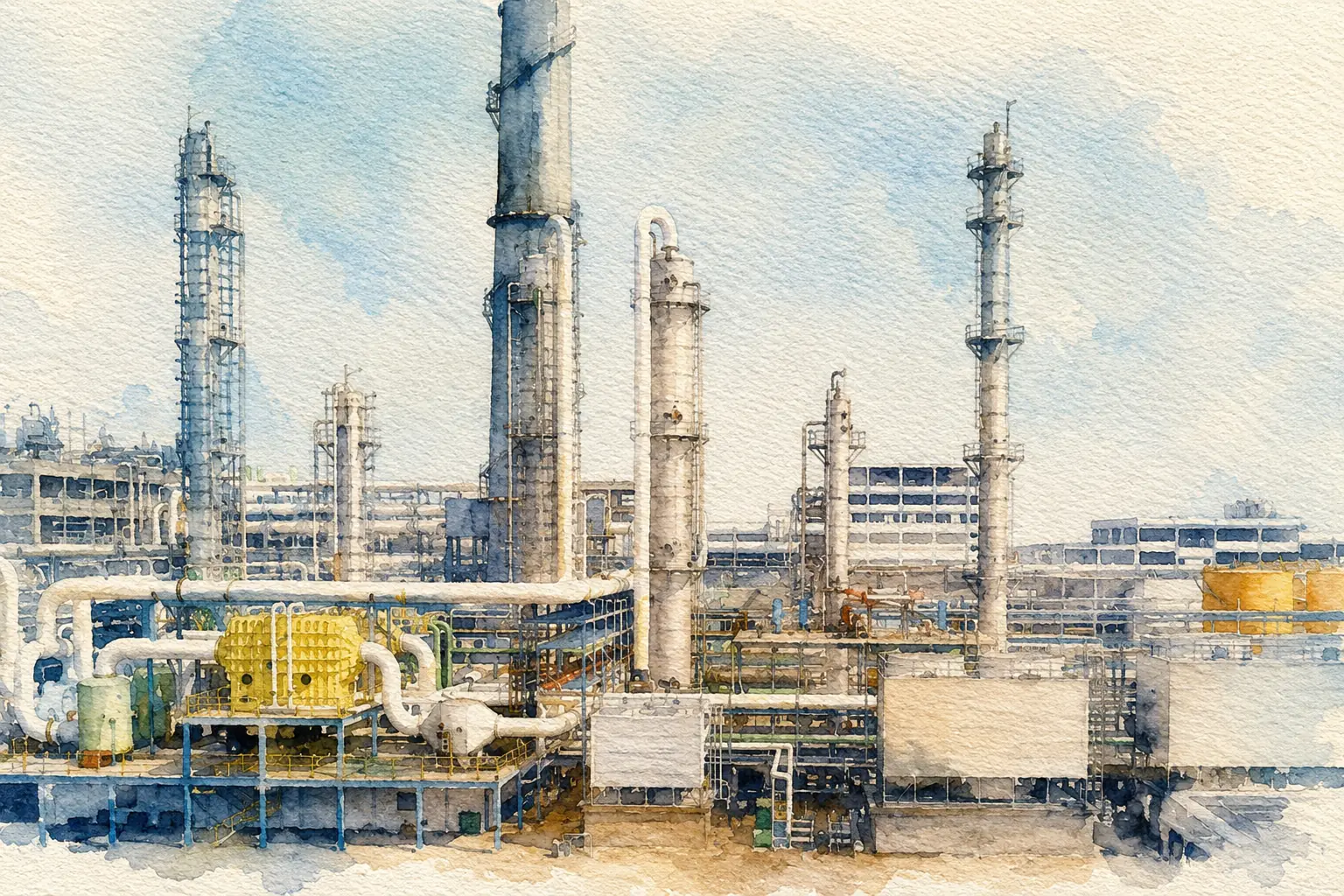
08 · Pharmaceutical Solvent Recovery
Where solvent is lost in an API plant
Bulk-drug and API plants use large volumes of solvent, and much of what is not recovered as liquid leaves as vapour through vents such as:
- Reactor vents during charging, heating, distillation and nitrogen purging
- Centrifuges, Nutsche filters and filter-dryers
- Tray, vacuum, rotary-cone and fluid-bed dryers
- Solvent storage tanks and receivers, through breathing and filling losses
- Vacuum-pump exhausts and scrubber outlets
These vents are many, small and intermittent, and the solvent and flow change from batch to batch. That makes pharma vent losses hard to see and easy to underestimate — and every kilogram lost is a kilogram bought again.
Solvents commonly recovered
Methanol, ethanol, isopropanol, n-butanol, acetone, MIBK, ethyl acetate, toluene, hexane, heptane, tetrahydrofuran, acetonitrile, methylene dichloride and other chlorinated solvents. See the full list of 43 recoverable VOCs, or the dedicated page on acetone recovery.
Compliance: CPCB’s draft guidelines for the pharmaceutical industry
In early 2025 the Central Pollution Control Board invited comments on draft environmental guidelines for the pharmaceutical industry. As published for comment, they propose that plants:
- Recover up to 95% of spent solvent in captive units
- Keep total solvent losses within 5% of solvent inventory
- Control VOCs with devices such as scrubbers, condensers and absorbers
- Run a leak detection and repair (LDAR) programme
We are not aware of a final notification as of October 2026, so treat these as proposals. Solvent recovery and VOC control can also appear as conditions in a plant’s Environmental Clearance or Consent to Operate, so check your own consent documents. More on VOC norms in India.
How Genosorb® absorption helps a pharmaceutical plant
One unit for many vents
A common header can collect vents from reactors, centrifuges, dryers and tanks across a production block and send them to one centralised recovery unit, instead of a device on every vent.
Handles changing solvent mixes
Genosorb absorbs both polar and non-polar solvents, and the grade or blend is matched to your solvent list — useful when products and solvents change from campaign to campaign.
Copes with batch swings
Multi-source recovery systems have maintained compliance even as individual feed flows and concentrations vary widely, as they do when batches start, purge and stop.
Safe with ketones and chlorinated solvents
There are no carbon beds to overheat with ketones, and chlorinated solvents are recovered as liquid instead of being burned into acid gases in an oxidiser.
Solvent back, not burned
Recovered solvent reduces fresh purchases and the CO₂ an oxidiser would add — about 1.3 kg CO₂-equivalent avoided per kg recovered.
Measured before it is designed
CCDC can measure losses at each vent and give you a kg/day figure with a rupee value before any plant is designed.
Reusing recovered solvent under GMP
Recovered solvent can be reused in the same step, in an earlier or less critical step, for equipment cleaning, or sold. Reuse in API manufacture must follow the plant’s quality system, which usually means a specification and testing for the recovered solvent and a documented approval. CCDC designs the recovery plant around the purity your quality team needs.
Pharma plants across India
CCDC works from Chennai and supports plants anywhere in India, including the API and bulk-drug clusters around Hyderabad, Visakhapatnam, Vapi–Ankleshwar–Dahej and Baddi. Every system is designed, engineered and fabricated in India and delivered skid-mounted for outdoor installation.
Frequently asked questions
Does CPCB require pharma plants to recover 95% of their solvent?
CPCB’s draft guidelines for the pharmaceutical industry, published for comment in early 2025, propose recovering up to 95% of spent solvent and keeping losses within 5% of inventory. We are not aware of a final notification as of October 2026. Your Environmental Clearance or Consent to Operate may already contain solvent-recovery conditions.
Can one recovery unit serve several reactor and dryer vents?
Yes. Vents from across a block can be collected into one header and treated in a single Genosorb unit. CCDC has designed single installations serving more than twenty emission points.
Our reactors already have vent condensers. Why add absorption?
Vent condensers work well on concentrated vapour but lose efficiency as nitrogen and air dilute the stream, which is common during purging and drying. Absorption keeps working at low concentrations, so many plants keep their primary condensers and add a central absorption unit for the solvent that gets past them.
We do not know how much solvent we lose. Where do we start?
CCDC can visit the plant, measure VOC emissions from each vent and give you a kg/day figure with a rupee-value loss estimate. That measurement is the basis for a feasibility study.