10 · Beyond VOC – Biogas Purification & Effluent Water COD Reduction
Biogas Purification & Gas Recovery
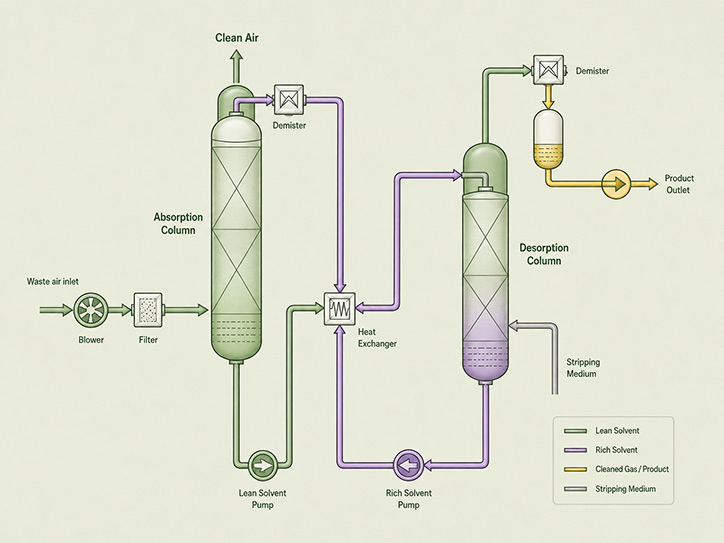
Genosorb's absorption chemistry extends past organic solvent capture into acid-gas and biogas treatment.
Biogas upgrading
Removes CO₂, H₂S, COS, and mercaptans from raw biogas, producing purified biomethane. Operates at ~7 bar, methane loss <3%, Genosorb loss ~2%/yr.
H₂S removal
From syngas and IGCC plant feeds — recoverable as elemental sulphur via a low-energy ferrous EDTA process established since 1987.
CO₂ removal
From mixed low-molecular-weight hydrocarbon streams such as natural gas and raw biogas.
Natural gas sweetening
Selective absorption of acid gases from natural gas, the same approach applied to biogas.
Syngas purification
H₂S and sulphur-compound removal integrated into synthesis-gas production loops at large plants.
Sulphur recovery
H₂S captured and converted to elemental sulphur rather than simply scrubbed and disposed of.
Gas dehydration
A built-in side benefit of Genosorb's strong water affinity, delivered simultaneously with VOC or acid-gas removal.
Effluent Water – COD Reduction
Genosorb technology addresses high-COD effluent streams from synthetic organic chemical processes.
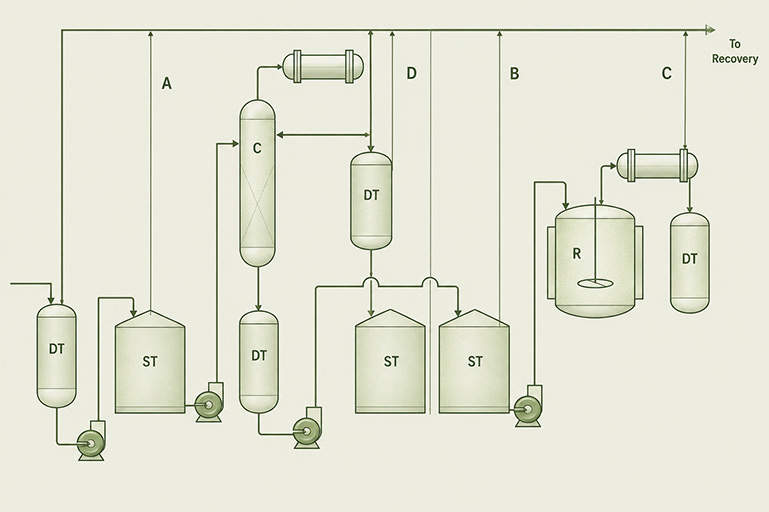
Effluent waters generated from many synthetic organic chemical production processes have high COD content. The COD content is mainly due to high concentrations of solvents in the effluent stream.
The solvents are stripped with air giving a low-concentration VOC stream, that is fed to a Genosorb plant or rotary concentrator and the solvents recovered. The gases coming from the concentrator can also be incinerated at a low cost. High air volumes are needed for efficient stripping.
Efficient recovery is possible using a rotary concentrator followed by a Genosorb plant.
Pilot solvents tested
7
different solvents
COD reduction
200,000 → <1,000
>99.5% reduction